অ্যানিমেশনEnglish৫টি পর্বমৌলিক
নবী মূসা (আ.)
কুরআনের কাহিনি অবলম্বনে অ্যানিমেটেড বর্ণনা, পুরো পরিবারের জন্য।
সাপ্তাহিক পর্ব
Hidayahপর্বসমূহ
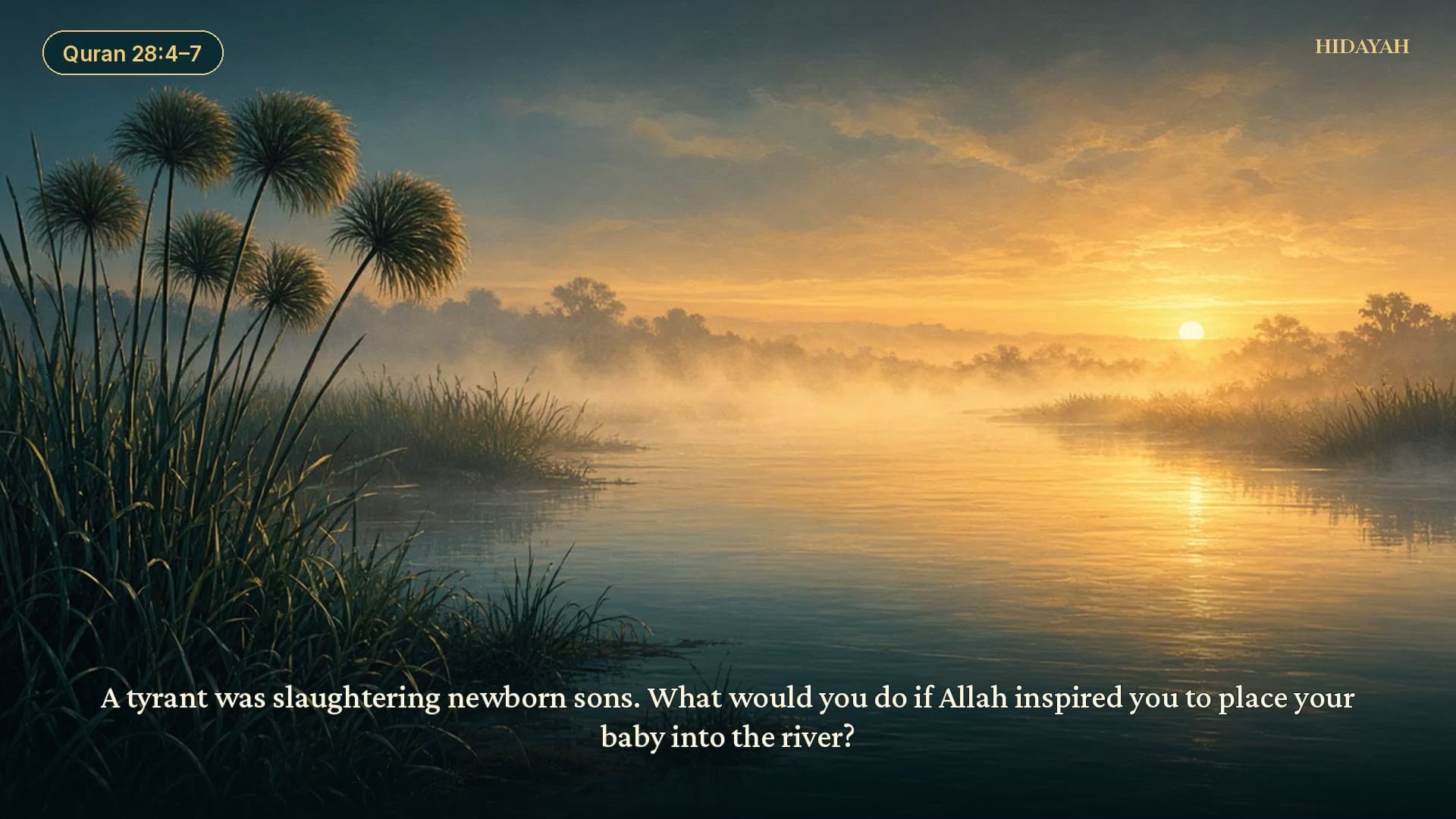
- 6:43পর্ব ১Prophet Musa (AS) Story Ep 6 | Born in the Shadow of Pharaohকোনো ভিউ নেই · ৫ দিন আগেA tyrant slaughtering newborn sons. A mother inspired to cast her baby into the river. Begin the story of Prophet Musa (Moses), peace be upon him, in Episode 6: Born in the Shadow of Pharaoh.
This Quran-only episode follows Surah Al-Qasas 28:3–13 and Surah Taha 20:38–40, with 20:37 as context: Pharaoh's oppression, Allah's intention to favor the oppressed, the inspiration to the mother of Musa, the chest cast into the river, the family of Pharaoh picking him up, the words of Pharaoh's wife, a mother's empty heart, his sister following him, the wet nurses prevented, and the promise of Allah fulfilled as he was restored to his mother. The Quran does not name Musa's mother, sister or Pharaoh's wife, so no names are added. Only the first part of 20:40 is quoted; its later events belong to the next episodes.
Every on-screen quotation is an exact excerpt of the Saheeh International translation with its verse reference. Arabic cards use Uthmani Quran text. Narration uses Musa; the translation writes Moses. Spoken quotations omit bracket notation and explanatory [i.e., ...] glosses, while captions preserve the source wording. No hadith, israiliyyat, invented names or invented conversations are used.
Chapters
0:00 Born in the Shadow of Pharaoh
0:16 A Tyrant in the Land
1:30 Inspired to a Mother
2:31 Into the River
3:34 A Mother's Empty Heart
4:44 The Promise of Allah Is True
5:22 Reflections on the Verses
6:01 Sources & Next Episode
Sources
Visuals and voices made with AI assistance.
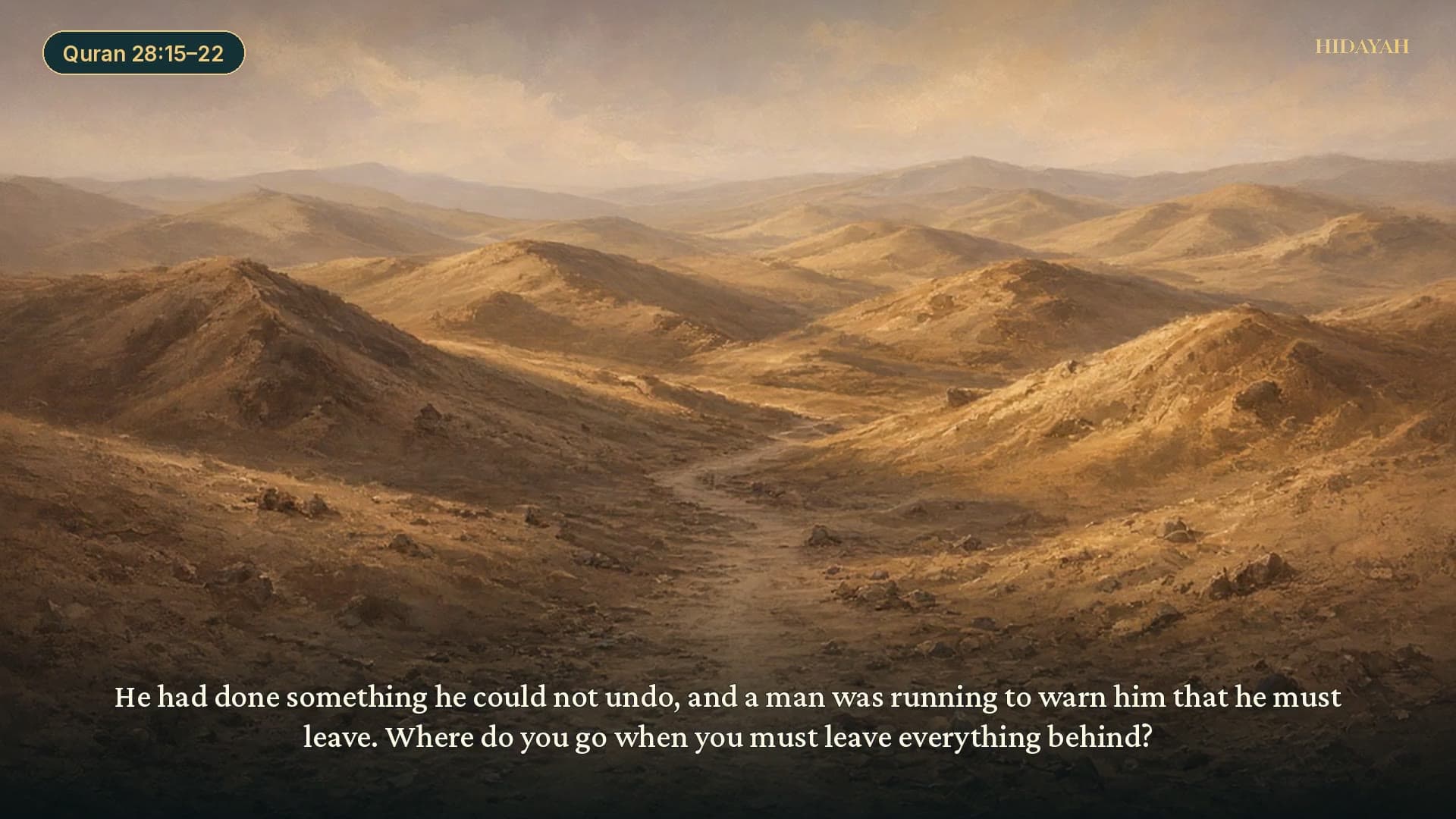 6:56পর্ব ২Prophet Musa (AS) Story Ep 7 | Escape to Madyanকোনো ভিউ নেই · ৫ দিন আগেHe did something he could not undo, and a man ran to warn him to leave. Follow the story of Prophet Musa (Moses), peace be upon him, in Episode 7: Escape to Madyan.
This Quran-only episode follows Surah Al-Qasas 28:14–28: Musa receiving judgement and knowledge, the day in the city, his prayer for forgiveness and the verse that says Allah forgave him, the second day, the man who came running to warn him, his flight and prayer to be guided toward Madyan, the two women at the water, his prayer of need, the invitation, the words that the best one to hire is the strong and the trustworthy, the offer of the father, and the agreement with Allah as Witness. The Quran does not name the two men, the man who ran, the two women or their father, so no names are added. Later events belong to the next episodes.
Every on-screen quotation is an exact excerpt of the Saheeh International translation with its verse reference. Arabic cards use Uthmani Quran text. Narration uses Musa; the translation writes Moses. Spoken quotations omit bracket notation and explanatory [i.e., ...] glosses, while captions preserve the source wording. No hadith, israiliyyat, invented names or invented conversations are used.
Chapters
0:00 Escape to Madyan
0:17 A Man in the City
1:29 My Lord, Forgive Me
2:38 Run From the City
3:20 The Water of Madyan
4:15 The Best One to Hire
5:12 Allah Is Witness
5:41 Reflections on the Verses
6:20 Sources & Next Episode
Sources
Visuals and voices made with AI assistance.
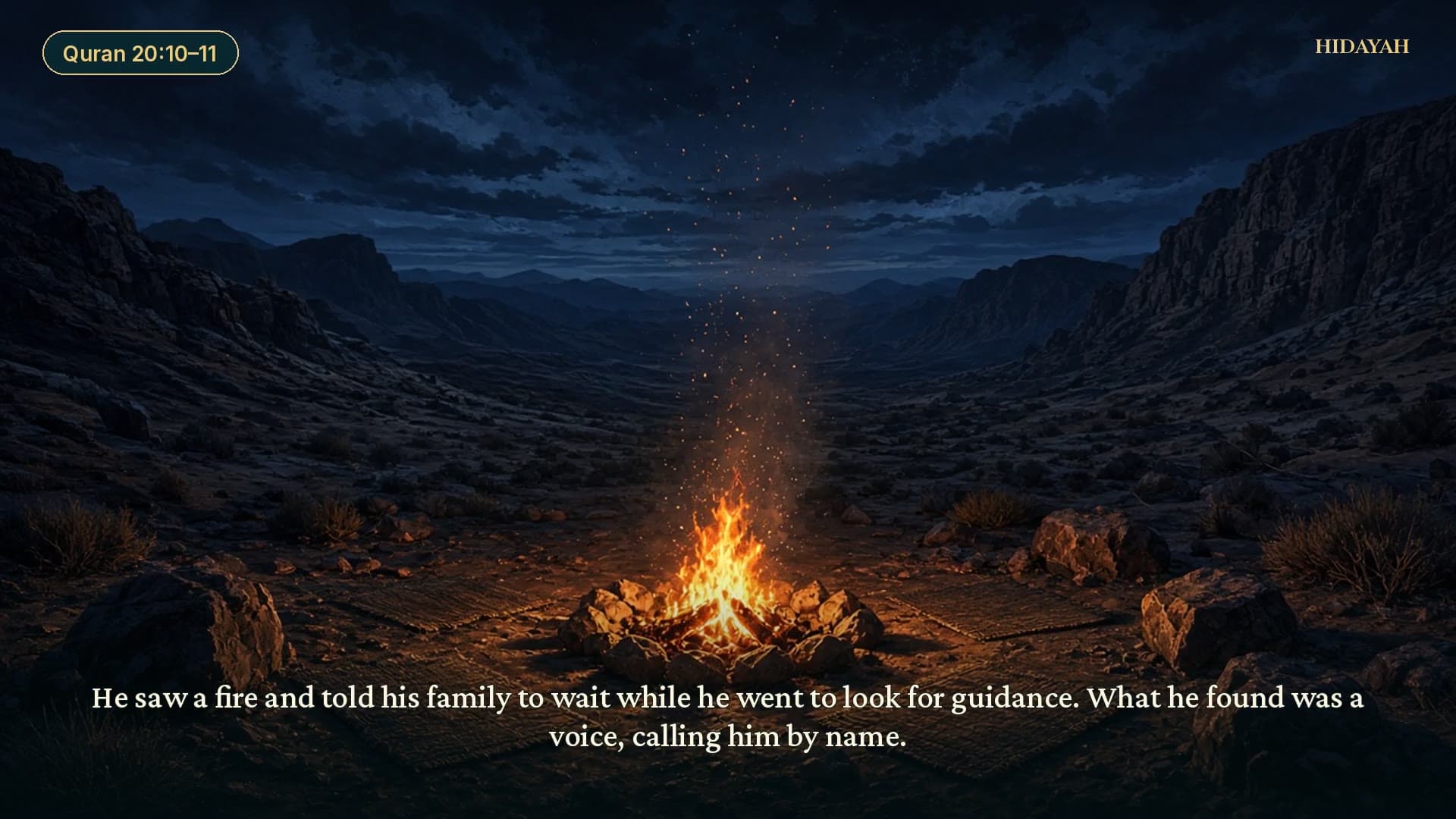 6:52পর্ব ৩Prophet Musa (AS) Story Ep 8 | The Fire on the Mountainকোনো ভিউ নেই · ৫ দিন আগেHe saw a fire, told his family to wait, and went to look for guidance. What he found was a voice calling him by name. Follow the story of Prophet Musa (Moses), peace be upon him, in Episode 8: The Fire on the Mountain.
This Quran-only episode follows Surah Taha 20:9–36 and Surah Al-Qasas 28:29–35: the term completed and the journey with his family, the fire seen from the direction of the mount, the call to remove his sandals in the blessed valley, the declaration that there is no deity except Allah, the question about what was in his right hand, the staff that became a snake and the words fear not, the hand that came out white, the command to go to Pharaoh, Musa's prayer to expand his breast, ease his task, untie the knot from his tongue and appoint his brother Aaron, and the answer that his request was granted and his arm would be strengthened. The Quran does not add names beyond those in the verses, and none are invented. Later events belong to the next episodes.
Every on-screen quotation is an exact excerpt of the Saheeh International translation with its verse reference. Arabic cards use Uthmani Quran text. Narration uses Musa; the translation writes Moses and Aaron. Spoken quotations omit bracket notation and explanatory [i.e., ...] glosses, while captions preserve the source wording. No hadith, israiliyyat, invented names or invented conversations are used.
Chapters
0:00 The Fire on the Mountain
0:17 A Fire in the Distance
1:29 Remove Your Sandals
Visuals and voices made with AI assistance.
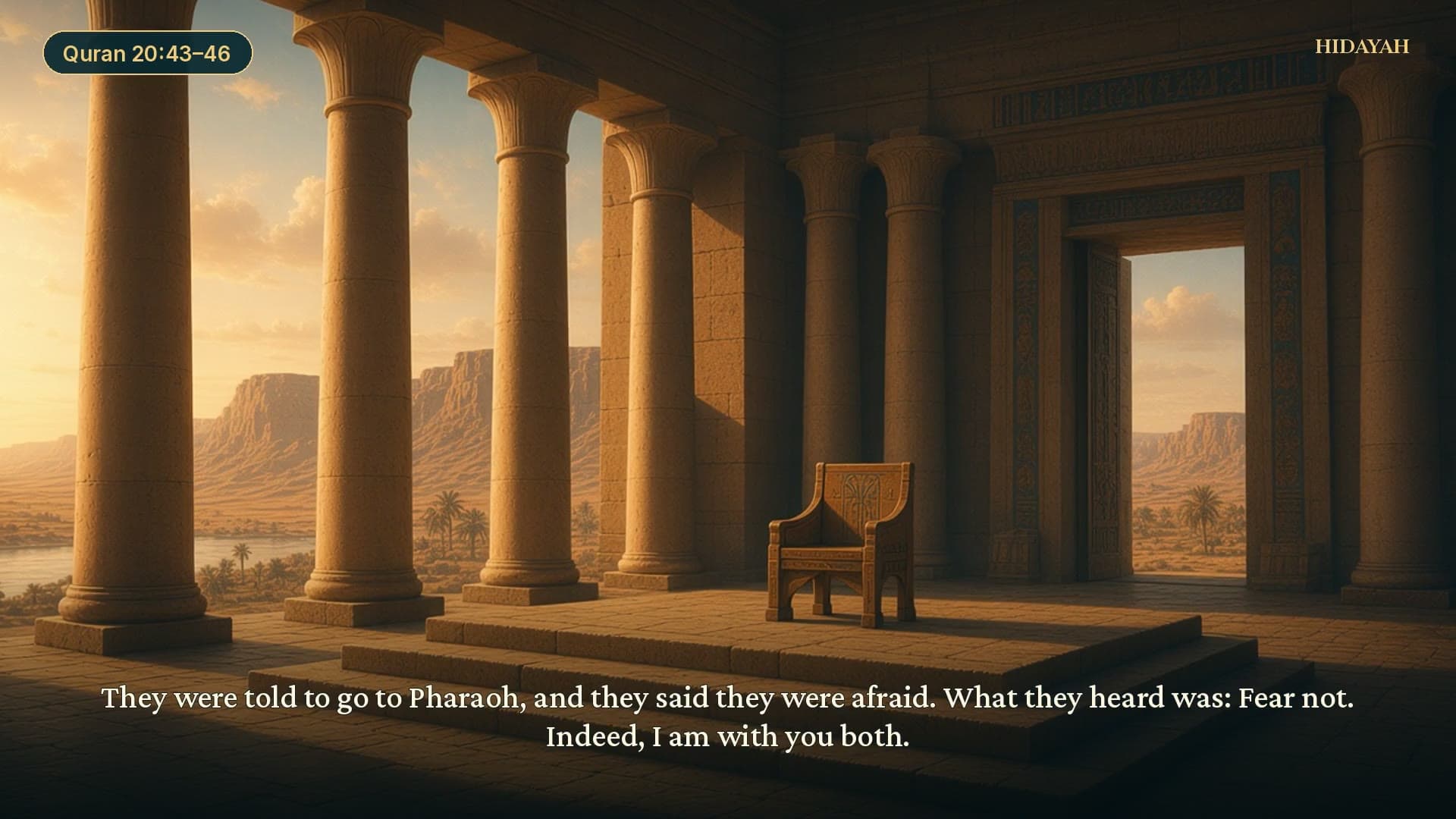 7:04পর্ব ৪Prophet Musa (AS) Story Ep 9 | Pharaoh and the Magiciansকোনো ভিউ নেই · ৫ দিন আগেThey were told to go to Pharaoh, and they said they were afraid. What they heard was: Fear not. Indeed, I am with you both. Follow the story of Prophet Musa (Moses), peace be upon him, in Episode 9: Facing Pharaoh and the Magicians.
This Quran-only episode follows Surah Taha 20:42–73 and Surah Ash-Shu'ara 26:10–51: the command to go, you and your brother, with gentle speech; their fear and the words Fear not, I am with you both, I hear and I see; the message to send with them the Children of Israel; Pharaoh's question about their Lord; the answer that He gave each thing its form and then guided it, and that He neither errs nor forgets; the signs shown, including the staff and the hand; the appointment on the day of the festival; the magicians who threw their ropes and staffs; the fear Musa sensed, the words Fear not, you are superior, and the staff that swallowed what they crafted; the magicians falling down in prostration, saying they had believed in the Lord of Aaron and Moses; and their reply when Pharaoh threatened them. The Quran does not add names beyond those in the verses, and none are invented. Later events belong to the next episodes.
Every on-screen quotation is an exact excerpt of the Saheeh International translation with its verse reference. Arabic cards use Uthmani Quran text. Narration uses Musa; the translation writes Moses and Aaron. Spoken quotations omit bracket notation and explanatory [i.e., ...] glosses, while captions preserve the source wording.
Visuals and voices made with AI assistance.
 6:05পর্ব ৫Prophet Musa (AS) Story Ep 10 | The Sea Parts১ বার দেখা হয়েছে · ৫ দিন আগেThe two companies saw one another, and they said: We are to be overtaken. What he said was: No! Indeed, with me is my Lord; He will guide me. Follow the story of Prophet Musa (Moses), peace be upon him, in Episode 10: The Sea Parts.
This Quran-only episode follows Surah Ash-Shu'ara 26:52–68, Surah Taha 20:77–79 and Surah Yunus 10:90–92: the inspiration to travel by night with My servants, and the promise of a dry path through the sea; Pharaoh sending gatherers among the cities; the two companies seeing one another and the words No! Indeed, with me is my Lord; He will guide me; the command to strike the sea with the staff, and the sea parting with each portion like a great towering mountain; the saving of Moses and those with him; the drowning of the others; Pharaoh's words when drowning overtook him and the answer that follows; and the sign for those who succeed him. The Quran does not add names beyond those in the verses, and none are invented. Later events belong to other passages.
Every on-screen quotation is an exact excerpt of the Saheeh International translation with its verse reference. Arabic cards use Uthmani Quran text. Narration uses Musa; the translation writes Moses. Spoken quotations omit bracket notation and explanatory [i.e., ...] glosses, while captions preserve the source wording. No hadith, israiliyyat, invented names or invented conversations are used.
Chapters
0:00 The Sea Parts
0:18 Travel by Night
2:00 Indeed, We Are to Be Overtaken
Visuals and voices made with AI assistance.