رسوم متحركةEnglish٤ حلقاتأصلي
النبي إبراهيم عليه السلام
سرد متحرك لقصة من القرآن الكريم، بأسلوب هادئ يناسب العائلة كلها.
حلقات أسبوعية
Hidayahالحلقات
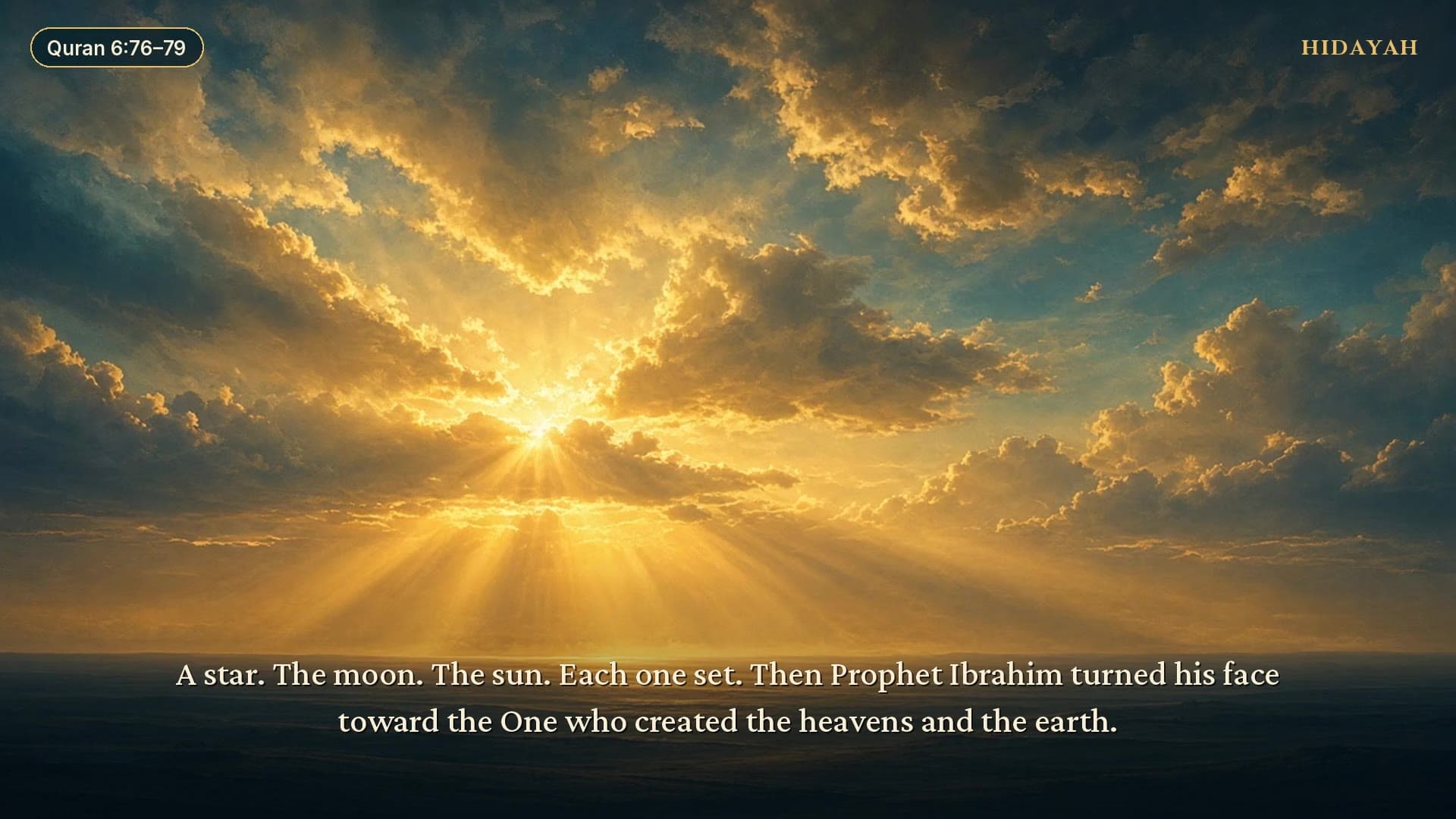
- 6:55الحلقة ١Prophet Ibrahim (AS) Story Ep 11 | Searching for Truthلا مشاهدات · قبل ٥ أيامHe saw a star. He saw the moon. He saw the sun. Each one set, and then he said: Indeed, I have turned my face toward He who created the heavens and the earth. Follow the story of Prophet Ibrahim (Abraham), peace be upon him, in Episode 11: Searching for the Truth.
This Quran-only episode follows Surah Al-An'am 6:74–83, Surah Maryam 19:41–48 and Surah Al-Anbiya 21:52–56: the question to his father about idols; the realm of the heavens and the earth shown to Ibrahim; the star, the moon and the sun that set; his words to his people, "O my people, indeed I am free from what you associate with Allah"; the argument of his people and his question about which of the two parties has more right to security; his gentle words to his father in Surah Maryam, including "Peace will be upon you"; and his question to his father and his people in Surah Al-Anbiya, "What are these statues to which you are devoted?" The Quran does not add names beyond those in the verses (the verses name his father as Azar), and none are invented. Later events belong to other passages and other episodes.
Every on-screen quotation is an exact excerpt of the Saheeh International translation with its verse reference. Arabic cards use Uthmani Quran text. Narration uses Ibrahim; the translation writes Abraham. Spoken quotations omit bracket notation and explanatory [i.e., ...] glosses, while captions preserve the source wording. No hadith, israiliyyat, invented names or invented conversations are used.
Chapters
Visuals and voices made with AI assistance.
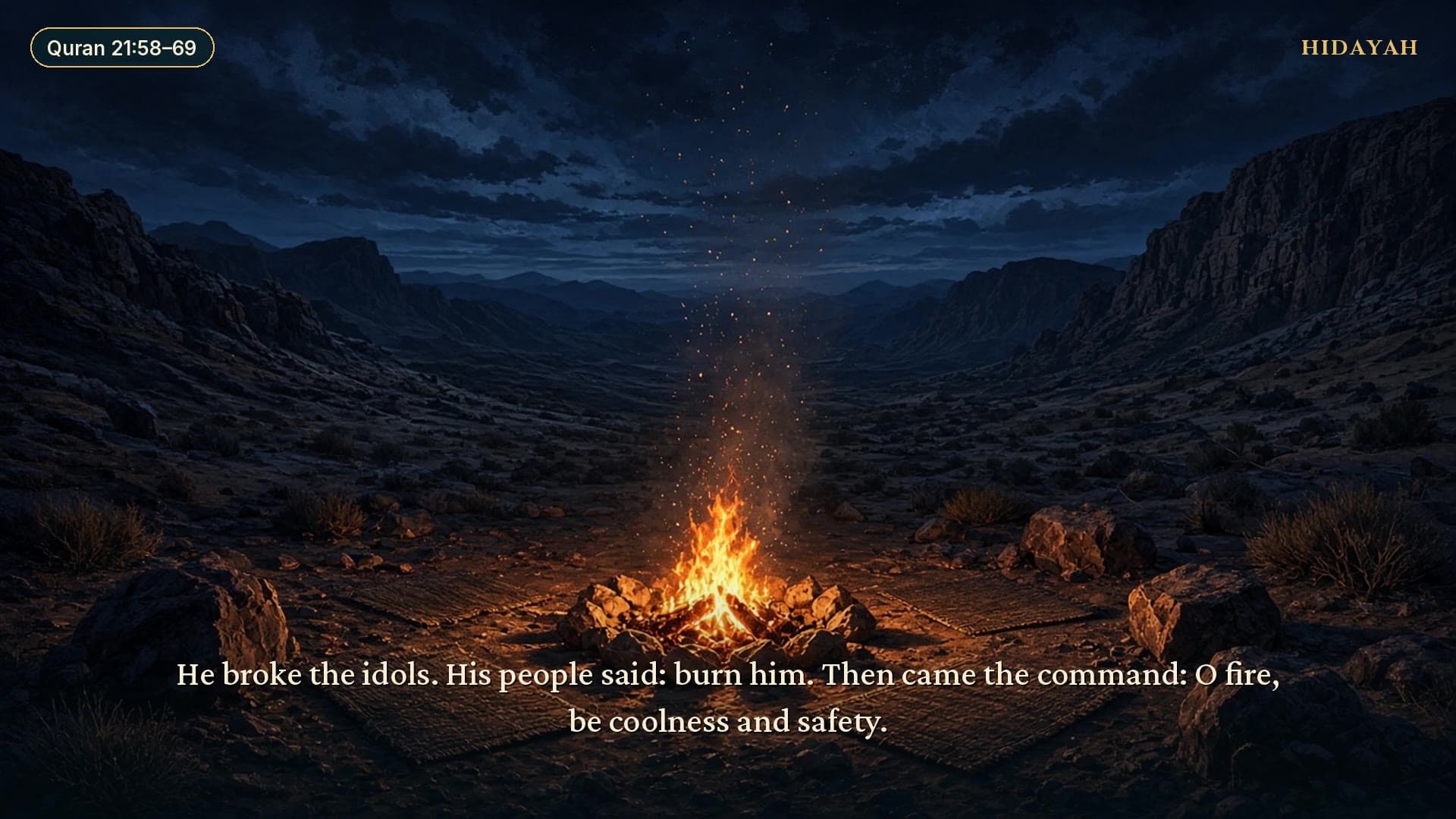 6:26الحلقة ٢Prophet Ibrahim (AS) Story Ep 12 | The Fire Became Coolلا مشاهدات · قبل ٥ أيامHe broke the idols, and his people said: Burn him. Then Allah said: O fire, be coolness and safety upon Abraham. Follow the story of Prophet Ibrahim (Abraham), peace be upon him, in Episode 12: The Fire Became Cool.
This Quran-only episode follows Surah Al-Anbiya 21:51–70, with Surah As-Saffat 37:83–98 and Surah Al-Ankabut 29:24: the sound judgement given to Ibrahim and the sound heart with which he came to his Lord; his question to his father and his people, "What are these statues to which you are devoted?"; his plan against the idols; the idols made into fragments except a large one; the question of his people, "Have you done this to our gods, O Abraham?"; his answer, "so ask them, if they should [be able to] speak"; his question, "Then will you not use reason?"; the command of his people, "Burn him and support your gods"; the command of Allah, "O fire, be coolness and safety upon Abraham"; and the end of their plan, "but We made them the greatest losers." No names are added beyond those in the verses, and none are invented. Later events belong to other passages and other episodes.
Every on-screen quotation is an exact excerpt of the Saheeh International translation with its verse reference. Arabic cards use Uthmani Quran text. Narration uses Ibrahim; the translation writes Abraham. Spoken quotations omit bracket notation and explanatory [i.e., ...] glosses, while captions preserve the source wording.
Visuals and voices made with AI assistance.
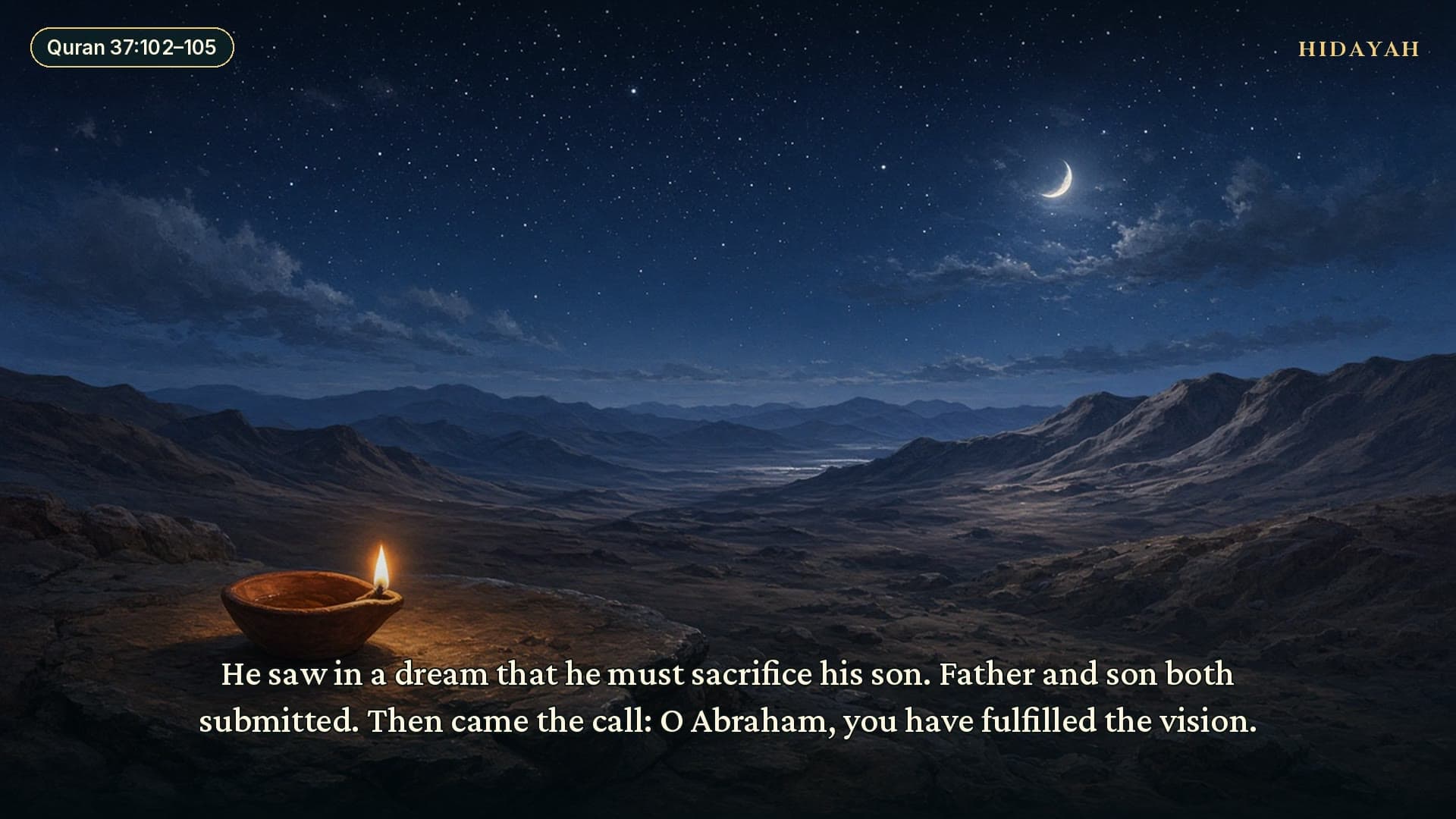 6:12الحلقة ٣Prophet Ibrahim (AS) Story Ep 13 | The Sacrificeلا مشاهدات · قبل ٥ أيامHe saw in a dream that he must sacrifice his son. Father and son both submitted. Then came the call: O Abraham, you have fulfilled the vision. Follow the story of Prophet Ibrahim (Abraham), peace be upon him, in Episode 13: The Sacrifice.
This Quran-only episode follows Surah As-Saffat 37:99–113: his words, "Indeed, I will go to [where I am ordered by] my Lord; He will guide me"; his prayer, "My Lord, grant me [a child] from among the righteous"; the good tidings of a forbearing boy; the dream, "O my son, indeed I have seen in a dream that I [must] sacrifice you, so see what you think"; the answer of the son, "O my father, do as you are commanded. You will find me, if Allāh wills, of the steadfast"; the moment they both submitted; the call, "O Abraham, You have fulfilled the vision"; "Indeed, this was the clear trial"; "And We ransomed him with a great sacrifice"; "Peace upon Abraham"; and the good tidings and blessing that close the passage. The verses do not name the son, and this episode does not name him. No names or details are added beyond those in the verses, and none are invented. Later events belong to other passages and other episodes.
Every on-screen quotation is an exact excerpt of the Saheeh International translation with its verse reference. Arabic cards use Uthmani Quran text. Narration uses Ibrahim; the translation writes Abraham. Spoken quotations omit bracket notation and explanatory [i.e., ...] glosses, while captions preserve the source wording.
Visuals and voices made with AI assistance.
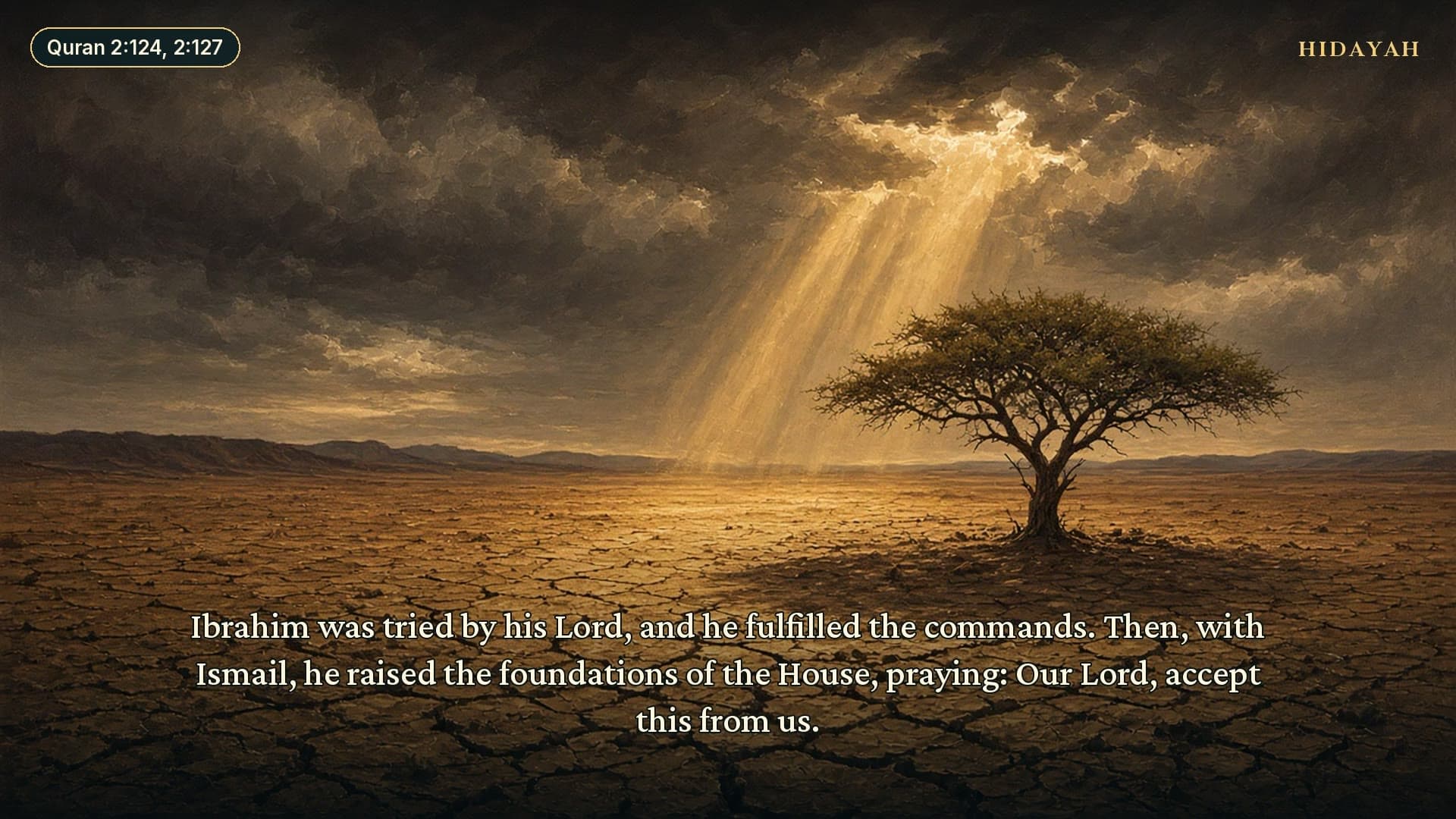 6:46الحلقة ٤Prophet Ibrahim (AS) Story Ep 14 | Building the Kaabaلا مشاهدات · قبل ٥ أيامIbrahim was tried by his Lord, and he fulfilled the commands. Then, with Ismail, he raised the foundations of the House, praying: Our Lord, accept this from us. Follow the story of Prophet Ibrahim (Abraham), peace be upon him, in Episode 14: Building the Kaaba.
This Quran-only episode follows Surah Al-Baqarah 2:124–129 and Surah Ibrahim 14:35–41: the trial, "Indeed, I will make you a leader for the people"; his question, "And of my descendants?"; the answer, "My covenant does not include the wrongdoers"; the House made "a place of return for the people and [a place of] security"; the charge, "Purify My House"; his prayer for "a secure city"; the building itself, "when Abraham was raising the foundations of the House and [with him] Ishmael"; their prayer, "Our Lord, accept [this] from us. Indeed, You are the Hearing, the Knowing"; "make us Muslims [in submission] to You"; "send among them a messenger from themselves"; and the prayers of Surah Ibrahim, "I have settled some of my descendants in an uncultivated valley near Your sacred House" and "Praise to Allāh, who has granted to me in old age Ishmael and Isaac." Ishmael and Isaac are named only because the verses name them. No names or details are added beyond those in the verses, and none are invented. Later events belong to other passages and other episodes.
Every on-screen quotation is an exact excerpt of the Saheeh International translation with its verse reference. Arabic cards use Uthmani Quran text.
Visuals and voices made with AI assistance.